In a B2B manufacturing company, leadership faced a troubling reality—topline growth had stalled despite a healthy order pipeline. Sales pointed to market conditions. Operations cited capacity constraints. Finance flagged margin pressure.
It looked like a revenue problem.
The CXO chose not to accept that narrative.
A deeper operational review followed.
What emerged was clear.
Delays weren’t driven by capacity—they were driven by inconsistency.
Frequent rework, unclear specifications, and last-minute changes disrupted production schedules. Delivery commitments slipped. Over time, customer confidence eroded—repeat orders slowed, and buying behaviour became cautious.
The topline wasn’t constrained by demand. It was being limited by execution.
The CXO reframed the problem:
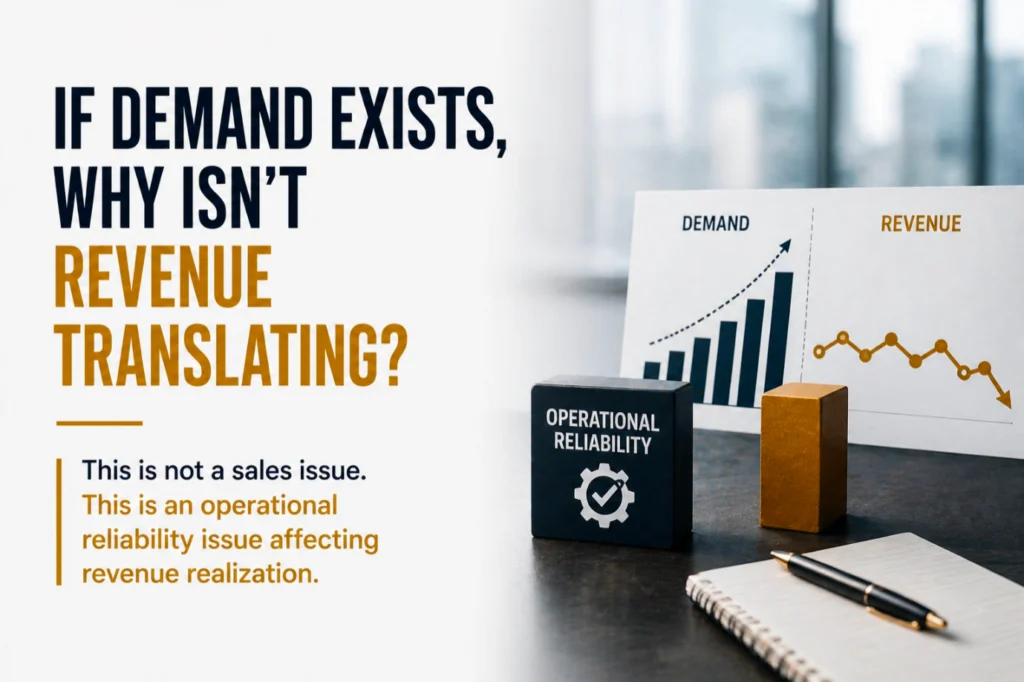
𝐓𝐡𝐢𝐬 𝐢𝐬 𝐧𝐨𝐭 𝐚 𝐬𝐚𝐥𝐞𝐬 𝐢𝐬𝐬𝐮𝐞. 𝐓𝐡𝐢𝐬 𝐢𝐬 𝐚𝐧 𝐨𝐩𝐞𝐫𝐚𝐭𝐢𝐨𝐧𝐚𝐥 𝐫𝐞𝐥𝐢𝐚𝐛𝐢𝐥𝐢𝐭𝐲 𝐢𝐬𝐬𝐮𝐞 𝐚𝐟𝐟𝐞𝐜𝐭𝐢𝐧𝐠 𝐫𝐞𝐯𝐞𝐧𝐮𝐞 𝐫𝐞𝐚𝐥𝐢𝐳𝐚𝐭𝐢𝐨𝐧.
That shift changed the response.
Instead of chasing more orders, the organization focused on stabilizing execution—tightening order validation, aligning functions, and reducing variability at the source.
Within months, delivery reliability improved. Customer trust returned. Repeat business strengthened.
Revenue followed.
Not because the company sold more—
but because it executed better.
Experienced CXOs don’t separate topline from operations. They know growth is a downstream outcome of upstream discipline.
Because what appears as a market problem is often an operational problem in disguise.
And once you find it—the solution is already there.